






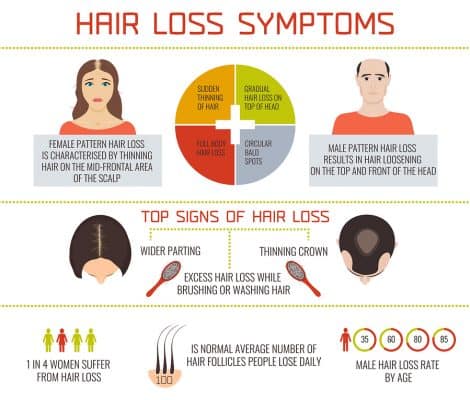
Understanding what causes hair loss is the first step in determining the right treatment for you. Each type of hair loss requires a different treatment to stimulate hair regrowth. On this page, we’ll walk you through the lead causes of hair loss in men and women, including: male pattern baldness, female pattern hair loss, traction alopecia, and alopecia areata.
What is Hair Loss?
 Hair loss, or “alopecia”, refers to the partial or complete loss of hair from the scalp or other parts of the body. It happens when the body’s natural hair growth cycle is disrupted, resulting in a person losing hair at a quicker rate than it can regrow.
While some hair loss is temporary and linked to factors such as stress, illness, or hormonal changes, other forms (e.g. genetic hair loss), are progressive and require long-term management. Understanding what causes hair loss and how it develops is the first step toward choosing the most effective treatment and prevention options.
There are several ways in which hair loss makes itself visible. The most common symptoms are: a receding hairline, general thinning, or localised shedding. When it comes to diagnosing a hair loss condition, the symptoms are a key giveaway.
How Do Hair Follicles Normally Grow?
In order to understand what hair loss is, it’s important to understand how hair follicles grow. All hair grows in a repeating cycle. These phases are:
- Anagen (growth phase): Hair actively grows for several years
- Catagen (transition phase): Growth slows and the follicle shrinks
- Telogen (resting/shedding phase): Hair falls out and new hair begins to grow
Hair loss occurs when this cycle is shortened, follicles become inactive, or shedding exceeds regrowth. When more hair follicles are in the shedding or resting phase than growing, this would be considered hair loss. The scientific name we give this is “telogen effluvium”.
Common Types of Hair Loss (Alopecia)
“Alopecia” can’t be nailed down to a single condition. Instead, it is an umbrella term covering several condition. Each hair loss condition has its own causes, progression, and treatment options. Here are the most common types of alopecia we see at the Birmingham Clinic:
- Male Pattern Baldness (Androgenic Alopecia) – Male pattern hair loss is the most common cause of hair loss in men and is driven by genetics and sensitivity to the hormone dihydrotestosterone (DHT). It typically presents as a receding hairline, thinning at the temples, and hair loss at the crown, progressing gradually over time. While androgenetic alopecia is permanent, early treatment can help slow hair loss and preserve existing hair.
- Female Pattern Baldness (Androgenic Alopecia) – Female pattern baldness is a progressive form of hair thinning caused by genetic and hormonal factors. Unlike male pattern baldness, it usually presents as diffuse thinning across the top of the scalp or widening of the parting rather than complete bald patches. Although permanent, female pattern hair loss can often be managed with appropriate medical treatments and early diagnosis.
- Traction Alopecia – Traction alopecia is hair loss caused by repeated tension on the hair follicles, often from tight hairstyles such as braids, ponytails, weaves, or extensions. The condition commonly affects the hairline and temples and is usually reversible if identified early. Prolonged traction, however, can lead to permanent follicle damage and irreversible hair loss.
- Scarring Alopecia – Scarring alopecia refers to a group of inflammatory hair loss conditions that permanently destroy hair follicles and replace them with scar tissue. It can be caused by autoimmune disorders, infections, or chronic inflammation of the scalp. Early diagnosis and medical treatment are essential to prevent further hair loss, as regrowth is not possible once follicles are damaged.
- Alopecia Areata – Alopecia areata is an autoimmune condition in which the immune system attacks healthy hair follicles, leading to sudden, patchy hair loss on the scalp or body. The severity can vary, ranging from small bald patches to extensive hair loss. While hair often regrows on its own, alopecia areata can be unpredictable and may require medical management.
The Causes of Hair Loss: Hair Science Explained
Hair loss can develop for many different reasons, and in most cases it is influenced by a combination of genetic, hormonal, medical, and lifestyle factors. Understanding the underlying cause of hair loss is essential for choosing the most effective treatment for your and preventing further progression.
Genetic/Hereditary hair loss
The most common cause of hair loss is androgenetic alopecia, also known as male pattern baldness or female pattern hair loss. This inherited condition occurs when hair follicles are genetically sensitive to the hormone dihydrotestosterone (DHT), leading to gradual follicle miniaturisation and reduced hair growth.
Genetic hair loss is progressive and permanent, but early treatment can help slow or stabilise hair thinning. Patients experiencing the early signs of pattern hair loss tend to try medications like finasteride or minoxidil. Many patients opt for a hair transplant as a long-term solution.
Hormonal Changes
Hormonal imbalances are a significant cause of hair loss, particularly in women. Changes associated with pregnancy, childbirth, menopause, polycystic ovary syndrome (PCOS), and thyroid disorders can disrupt the normal hair growth cycle.
Hormonal hair loss often presents as diffuse thinning rather than distinct bald patches and may improve once hormone levels are stabilised. In almost all cases, traditional treatment options like DHT-blockers or a hair transplant are not recommended.
Traction and Mechanical Hair Loss
At the Birmingham Clinic, one of the most common causes of hair loss we see (especially in patients of Afro-Caribbean descent) is traction alopecia. Repeated tension or physical stress on the hair can lead to traction alopecia, commonly caused by tight hairstyles such as braids, ponytails, extensions, or weaves.
Hair loss typically affects the hairline and temples and may be reversible if addressed early. Prolonged tension, however, can result in permanent follicle damage. However, providing you have enough donor area to support a surgery, you may be eligible for a hair transplant.
Autoimmune Disease or Inflammatory Condition
Certain medical conditions cause hair loss by attacking or damaging hair follicles. Alopecia areata is an autoimmune disorder that leads to sudden, patchy hair loss, while scarring alopecia involves inflammation that permanently destroys hair follicles and replaces them with scar tissue.
Early diagnosis and medical treatment are critical to limiting long-term damage. While traditional DHT blocking medications won’t help in this scenario, you can also contact you GP about the possibility of a prescription for Ritlecitinib.
How to Diagnose Hair Loss and Scalp Disorders
If you’re experiencing hair loss and want to understand the underlying cause, booking a professional assessment is the first step. Accurate diagnosis is essential, as different types of hair loss and scalp disorders require different treatment approaches.
At the Birmingham Clinic, we offer free consultations with experienced patient advisors who specialise in hair loss diagnosis. During your consultation, we assess your scalp, hair density, medical history, and lifestyle factors to determine the cause of your hair loss and recommend the most effective treatment plan to support healthy hair growth.
We are specialists in diagnosing and treating male pattern hair loss (androgenetic alopecia) and provide evidence-based solutions tailored to each individual. Early diagnosis can significantly improve treatment outcomes and help prevent further hair loss.
Conclusion: Understanding Your Hair Loss Is the First Step to Treatment
Hair loss is a complex condition with many possible causes, ranging from genetics and hormonal changes to autoimmune and mechanical factors. As this guide shows, no two cases of alopecia are the same, which is why accurate diagnosis is essential before starting any form of treatment. Understanding the type of hair loss you’re experiencing allows for a targeted, evidence-based approach that gives you the best chance of preserving existing hair and supporting regrowth where possible.
At the Birmingham Clinic, we specialise in diagnosing hair loss conditions and guiding you towards the most appropriate treatment options based on your individual needs. If you’re concerned about hair thinning, shedding, or scalp changes, booking a free consultation is the most effective first step. Early intervention can make a significant difference in long-term results and help you regain confidence in your hair.
Patient Testimonials
Aside from achieving fantastic results, we believe that keeping in touch with our patients before, during and after their hair transplantation procedure is paramount – it helps to keep our patients feeling calm and in control. We’re always on hand to provide guidance, support and aftercare advice. Time and again, our patients tell us that this is what sets us apart from other clinics.
You can read our great reviews of FUE hair transplants over on Google and Trustpilot


